October 12, 2011

A CHAPEL IN SA REVISTA (SALINAS)


SA REVISTA CHAPEL
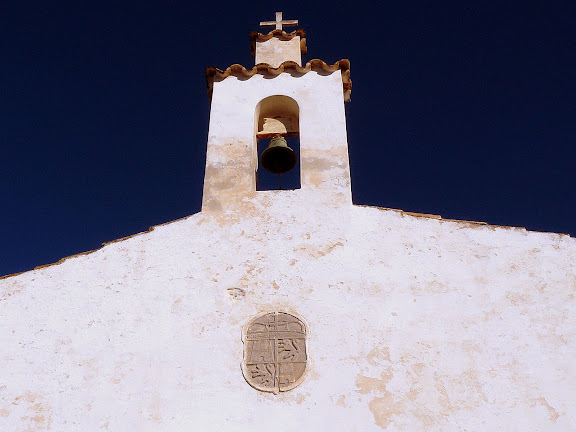
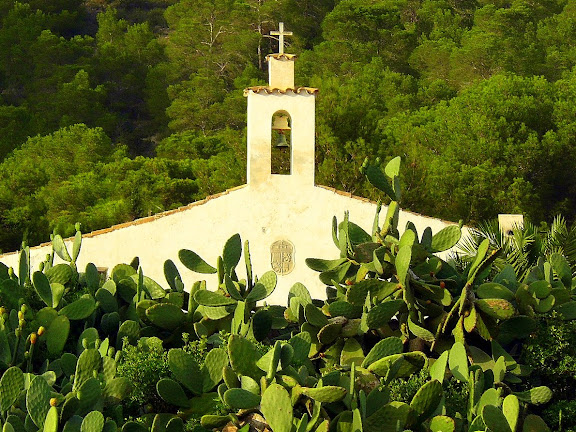
Immaculately white as all churches of Ibiza, this building was not a church but a chapel, but begun as an oratory in the eighteenth century for people working in tough conditions indeed, in the Salinas (salt flats). This chapel is very close to the beach of Es Cavallet and surrounded by nature and a few houses that form a graceful tiny village.
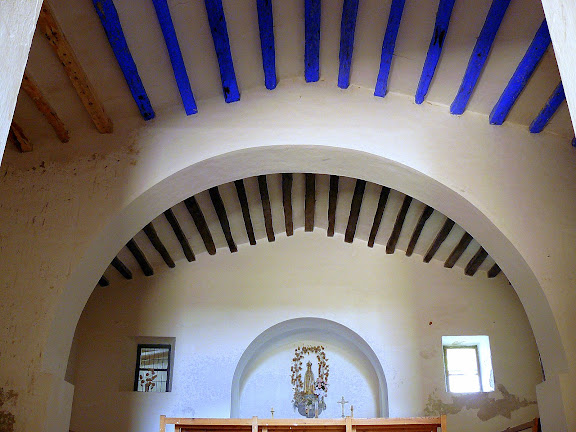
In the altar exists a religious image (even today when no longer is a religious building) of the Virgin of Fatima (do not know why), also ignored the curious fact that on the facade has a shield of Castile and Leon, as well as the nearby tiny church of Sant Francesc. Ibiza in the past belonged to the Kingdom of Aragon, but not to the Kingdom of Castile.

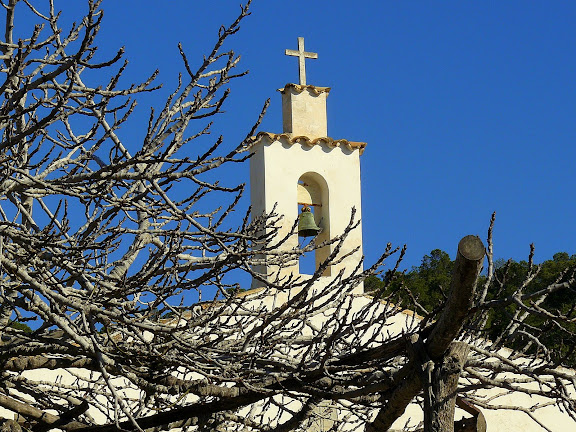
From its doors are easily visible the near salt ponds, with its distinctive flat landscape and square. The pristine white exterior of the chapel often contrasted with the deep blue Mediterranean sky and the gray trunks of the fig or prickly pear greens around the small building.

I take this entry to announce that this blog celebrates during this days the third anniversary since it was born in early October 2008. Thank you very much to all visitors, all who have commented both by mail or directly by the blog and I hope you´ll keep visiting this blog and will continue enjoying it. a big hug to all of you.

September 29, 2011

GREEN VINES


GREEN VINES IN LA MOLA

Ibiza and Formentera are gradually popular due to wines made on both islands. Before that the locals inhabitants did their wines in relatively small amounts at own homes in a totally traditional ways. Ibiza wine is often referred as "Vino de la Tierra" (land´s wine). It has strong flavor and dark red color, while there is another variety of white wines. A long time ago the Phoenicians made wine, so it´s a long tradition. Currently there are four wineries that are responsible for making wine commercially in large quantities. Do not forget that in the northern town of Sant Mateu de Aubarca is celebrated during December annually a festival dedicated to the wine of Ibiza.
little by little are appearing more vineyards on the Pitiusan fields such as these photographed in the area of ​​La Mola in Formentera in the highest part of the island of Formentera and where I walked for a few narrow dirt roads that made ​​me discover some planted areas with vineyards.

These vines with green leaves and twisted stems, contrasting with the stone walls or the many junipers in the islands. The red soil where these plants grow very well resisting the great summer season with little rain and as it is known, when less rain, more fine wines.

It is a pleasure to stroll through the upper part of Formentera surrounded by vineyards and the background of the famous lighthouse of La Mola on the verge of some impressive cliffs.

September 06, 2011

REFLECTIONS ON THE SALTWORKS


SALTWORKS REFLECTIONS

The Saltworks of Ibiza were the first industry on the island and it seems that the Phoenicians began to exploit themselves there around in 600 BC, later other cultures that inhabited the island temporarily continued with the production. The salary as such we know today were once paid in salt, and that was well knew by Romans who also settled the island and exploded the saltworks as well.

Their square shapes make their ponds retained water usually flat and that the landscape as well as the walls that divide the pond are reflexed, which is that being as they are a very interesting natural landscape also have their more abstract image.

During the sunsets, all is fully reflected, not only the landscape but also the multi-colored sky as the time pass, it changes making this place a very pleasant area. I have to mention too the declaration of Ibiza that the World Heritage Site by UNESCO includes both saline are in Ibiza and Formentera

August 28, 2011

WINDSURF IN FORMENTERA


WINDSURF AT S´ESTANY DES PEIX IN FORMENTERA

Very near from where the boat in Formentera arrives, is one of the two small ponds of Formentera, the smallest is actually a bay, quite well protected from strong winds and has a small outlet to the open sea and makes it ideal for anchoring small boats that here are fully protected from strong winds. An afternoon I was going to take the ship to back me in to Ibiza, and I went to the pond and when the sun was falling on the horizon, I was offered this print backlit silver and windsurfers were flying inside this lake with a stage full of local small fishing boats.

Although other sports like kitesurf have moved a bit back to this classic sport sea, which still have many supporters, as we see in Formentera where still is very popular. Sails up to the wind and swell with strength and power are the ones who move must overcome all the obstacles in the form of small boats which they should avoid.


The Windsurf has its origins in the 30's when a man named Tom Blake tired of rowing thought a way to move through the water that would be with a single sail. In the 60's popularized the sport and yet much still remains their supporters.
Here the viewer will also enjoy watching the sails moving almost in unison, and occasionally sails on the horizon disappear and reappearing shortly afterwards and seeing how they go on and come from a comfortable terrace with a beer or sometimes from the beach or shore and going up, and surfers, enjoying being able to walk or sometimes fly over the sea.

August 19, 2011

BARBARIA´S CAPE LIGHTHOUSE IN FORMENTERA


LIGHTHOUSE IN CAP DE BARBARIA

The Cape de Barbaria indicates the end of the island of Formentera on the west side, becomes the own Formentera´s Finisterrae. It is located there a lighthouse that is situated at an altitude of 78 meters above sea level and over a cliff. Barbaria's name seems to come from the nearby Barbary Coast from where the pirates and the consequent danger for the population came time ago.

This lighthouse became famous because when it was the image of a Spanish film that was shot a few years ago on the island, and appeared just behind the starring. To reach this lighthouse, a long narrow road takes a fairly desolate landscape and just sorrounded by savinas, (tree native of the island).

Perhaps this is one of the best places in Formentera to enjoy a nice sunset as it is situated on the west side of the island. There also exists lizards that live in this area with a distinctive and impressive blue color that only exist in the southwestern part of the island.

night falls the lighthouse´s light slowly begins to flash soft at first, then stronger, and is guiding home the boats that navigating in the dark of night are looking for their port, but at the same time give us a good show of light to those have come during this time of the day when the sky gradually darkens.

August 12, 2011

ES PAS DE S´ESPALMADOR


BETWEEN FORMENTERA AND ESPALMADOR


Es pas de s'Espalmador (or Es Trucadors) is a water sea passage that separates the islands of Formentera to the north of this and the Espalmador in its southern side. The color of the water is turquoise which makes this area a place of great beauty and great ecological and landscape value. On clear days you can see the southern island of Espalmador, the lighthouse is at the other end of the island and even we can see perfectly the island of Ibiza and its mountains in the background.


Although the island of Espalmador is the largest of the uninhabited islands pitiusas, still has some old houses that were inhabited until the nineteenth century, there is also a chapel dedicated which is visible from Formentera and is under the name of San Bernardo. Espalmador word, comes from the word "espalme" a verb that refers to the cleaning of vessels that were formerly in this island.


Part of this amazing color of the sea is owed to strong currents in this location, but we must not forget that these currents are also very dangers, even this year have failed victims in this regard, so even relatively easy "walk" from one island to another in the sea must be very cautious as the danger is always lurking in this area.

There is also on the island of Espalmador an old maritime surveillance tower, called Tower s'Espalmador, which warned of the dangers of pirate raids, between the sixteenth and seventeenth. In Espalmador there were several episodes of war between pirates and "Ibicencos", and early twentieth century the island was used as an important smuggling center. Espalmador is also famous for its salt water lagoon that is inside the island and its famous mud baths of doubtful therapeutic benefits.

In fact the sea leg we see today between Formentera and Espalmador used to be communicated through sand as the inhabitants of both islands put branches savina (native shrub very common in both islands) and made the sand that formed in these branches by the action of the sea, forming a path between two islands, where even carts and mules passed between the two islands. Espalmador was planted decades ago by wheat, figs, grapes ... etc until it was vacated and left to grow in it, taking the place of ancient mediteranean the native crops and other vegetation.

Below we can see the wooden path that we had to reach the northern tip of Es trocadors of Formentera and from there we expect to enjoy these magnificent views this place offers.

August 06, 2011

SA FERRADURA ISLAND


ILLA DE SA FERRADURA


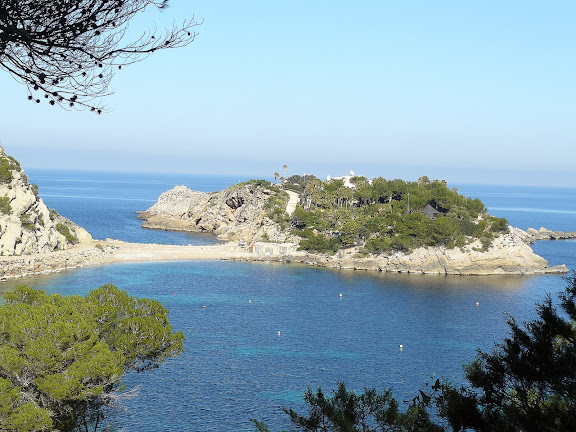
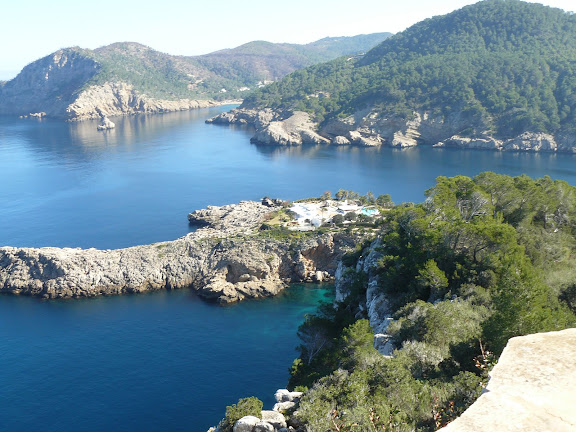
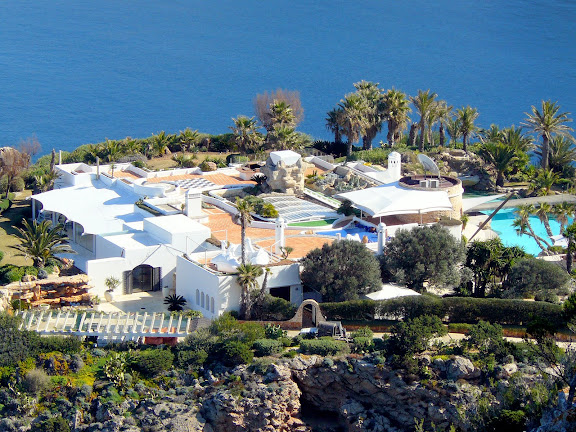
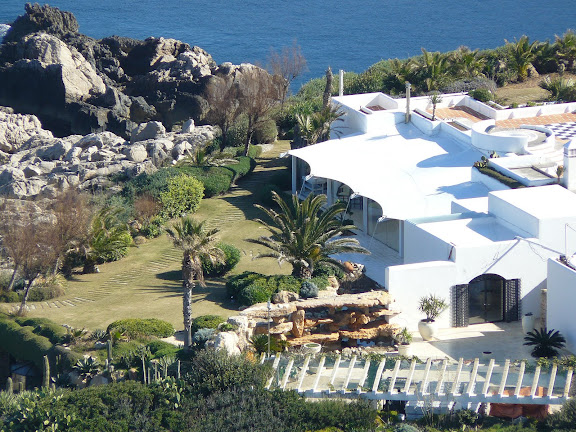
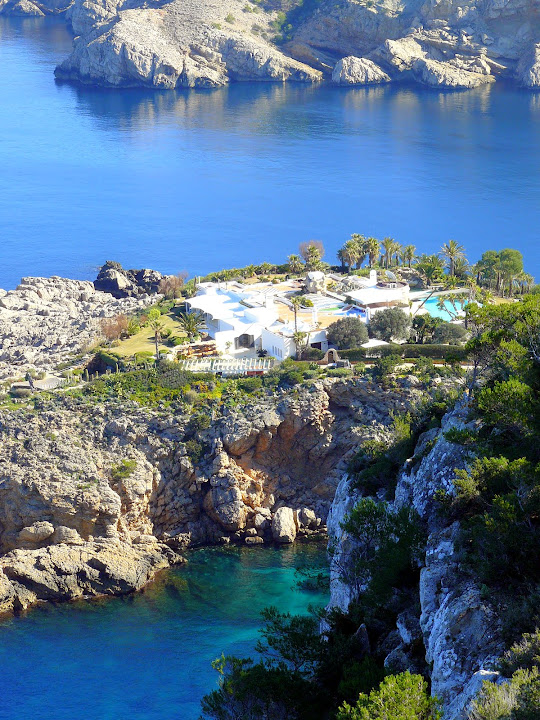
Despite the name, it is not an island, but a sort of peninsula or isthmus, which is located on it a great mansion. One of the finest homes in which there has been speculation who would be the lucky owner of it with a pool of names and mysteries surrounding the possible ownership of that property.


This place is located in the port of San Miguel and is quite visible from within the port located just north of the island of Ibiza.


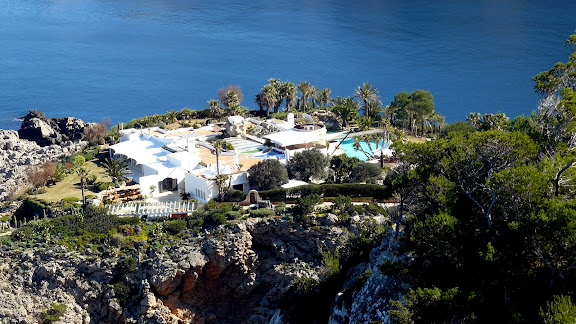
As we approach there, we see in more detail from the short distance of the mansion and surroundings, Ibiza certainly has a number of oddities large as housing is concerned, and this is a good example.


You can find some more information in the net, including fake pictures that looks like a real island due the isthmus is erased. the reality is that island is perfectly reachable by car.


We can see very well the gardens and that the white color predominates in the house, certainly a luxury available to few people.


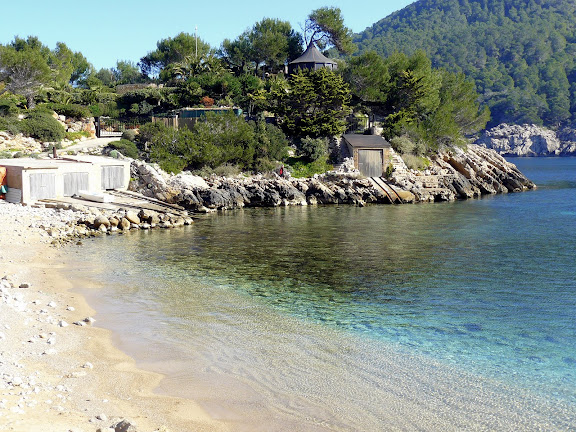
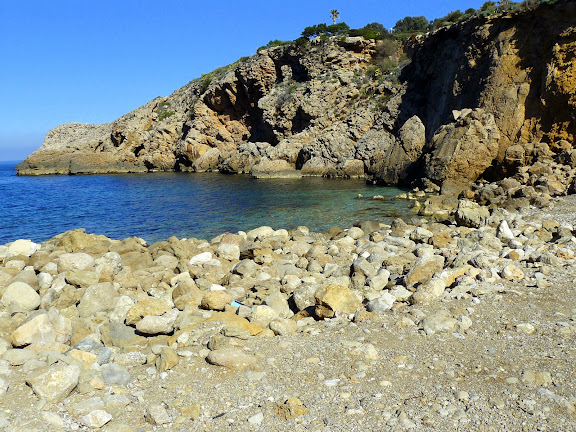
The isthmus that separates the "island" of the island of Ibiza is an area that on one side is rocky and in the other is a beach called Playa des pas. On the other hand is a good view from the tower just above the cliffs and not just of this small island, but also all the view of around the port of San Miguel and as well as all this north of the island.

July 22, 2011

NEPTUNE GRASS IN MITJORN BEACH IN FORMENTERA


COVERED ROCKS WITH NEPUTE GRASS


Mitjorn beach or Migjorn (Mitjorn or Migjorn means the south wind) the name of this beach exists on both islands, both on the south side of Ibiza and Formentera islands, in Ibiza is best known as Playa de Las Salinas and in Formentera preserves this name; Is a really long beach of nearly five miles long. In one place there are some rocks that after storms are covered with Neptune grass (Posidonea in spanish) The Posidonia is a sea plant not a seaweed as often is confused.


In this picture above we can see seagulls resting on rocks covered with Posidonia. Many people mistakenly think that the beach is dirty because the rest of Posidonia on the sand, but the reality is that thanks to this marine plant, sand is held in place in summer thanks to the action of this plant, and we must thank the posidonia also for the spectacular blue of the sea in some areas of the islands because the action and presence of this plant into the sea.


Posidonia meadows between Ibiza and Formentera, have the title of UNESCO World Heritage Site which was granted to Ibiza, biodiversity and culture, in 1999 and declared World Heritage property to the fortified town of Ibiza (Dalt Vila) the Punic necropolis of Puig des Molins, the Phoenician settlement of Sa Caleta and seagrass meadows in the area of the saltworks of Ibiza and Formentera.

In any case the sight of these rocks completely covered of sea grass in the coast of Formentera is just amazing.

July 14, 2011

THE LITTLE BOAT THAT LINKS TALAMANCA AND IBIZA TOWN


FROM TALAMANCA TO IBIZA CENTRO


In Ibiza there are things simply temporary, and some that are a classic and every year there are present season after season. In this case I want to dedicate a small tribute to this little mode of transport connecting the two opposite sides of the bay of Ibiza, transporting tourists and residents from the center of Ibiza Town (port of course) to the area more "chic" of Marina Botafoch at the other end just separate for mile and a half one to another.


Of Course I am talking about this small little boat, now known by several generations of Ibiza. A boat identical to that which today crosses the bay from the capital of the island began in 1932 cruising this little paths that linked the two areas (the tourist area of ​​Talamanca and Ibiza Town) and currently still does so. So in this case the slab is fully guaranteed.


As a bonus should be added that the views of the old town of Ibiza from this boat is amazingly nice on each route that takes only about ten to fifteen minutes. Here we can also easily find large ships entering or leaving the port a few meters from us.


And among these great modern yachts, this one more modest but still experienced daily by joining the two points of the Bay of Ibiza in summer daily from late March to late October and from 09.00 Hours untill late midnight.


Aniano today is heir to his ancestors who created this company and today continues to carry out personally. In addition they also have a different boat, this one, daily links the port of Marina Botafoch directly to the port of La Savina in Formentera at very good prices and very convenient for all these tourists who stay in the area of ​​Talamanca, where they can go on foot from their hotels to Marina Botafoch and then directly to the neighboring island.