April 14, 2012

ES PORTITXOL


ES PORTITXOL

It´s Perhaps one of the most beautiful and spectacular spots of the entire northern coast of the Es Amunts and the whole island as well. Easily accessible even after a long walk we find here a beautiful and natural harbor preceded by a stretch arm of sea that ends in a kind of lake, where calm reigns even on windy days.


In this kind of lake surrounded by pine trees and native flora, we will be also surprised by the colors of the sea, ranging from the more marine blue to green or turquoise, with a totally clean and transparent waters. Wildlife such as gulls and cormorants are quite abundant in this area, geographically far north of the island, between the rural villages of Sant Miquel and Sant Mateu.


The blue arm of sea that links this small harbor with the sea, contrasts with the rocks and plants that exist in the area (Portitxol in "ibicenco language" comes from the word meaning small port).

Although the arrival here is done through a small path after a long way that leads u untill here we are surprise about the number of booths that ships dock near the cove. It is no shortage of people who fish in these waters with their small boats. Sometimes we can even see the fishermen mending their networks before getting back to sea.

Undoubtedly the most impressive of this place are its clear waters, and although there is no sandy beach, we can have a bath here in these nice waters or even dive in.

The views that we enjoy as we go on our way from one side of this place, let us to enjoy the green forests that surround the place, and the clear blue sky and the waters contrasting with the small cliffs that give the water in and outlet the sea that bathes these shores.

Not only we can enjoy these waters, so does the wildlife found here because of the tranquility and the big amount of fishing. An attractive place, which makes us enjoy a few hours disconnected from the activities of the modern world.


An oasis that gives us a lot of beautiful landscapes difficult to find elsewhere on the island.

In addition the site gives us nice pictures of small fishing vessels or rest in their docks or just ready to navigate the sea and around these waters and try luck with fishing.

When we decided to go back, let's turn the head to see the beautiful landscape we leave behind. A road that is full of native nature leads us back up through a path a little heavier than when we came, so we must now to go all way up, all we had to climb down before, but always enjoing the explosion of nature that we encounter in this way and that now leads us away from this amazing site.

April 03, 2012

"ES PASSOS" IN SANT VICENT DE SA CALA

HOLY WEEK IN SAN VICENTE (SA CALA)
Although most of the parish churches celebrate it on Good Thursday, few of them do the Vía Crucis on previous Palm Sunday, as here in Sant Vicent de Sa Cala. This rural Vía Crucis is called by the locals "es passos". there are fourteen stations where they stop at each marked cross, and then the Priest reads about that station of the Christ passion and then men sing a very old traditional song for each station, and so do women as well, after them.
There is something that can amaze the visitors, sometimes this church during the Holy Week is surrounded by many multicolours bands due the near feast celebration of San Vicente Ferrer the saint Patron of the little village and so, sometimes they celebrate the Passion surrounded by many small flags hanging from the church.
The outdoors crosses are the sign of where to stop the porcession of this Vía Crucis and celebrate each station. the "passos" of Sa Cala and San Miguel are the most ancients of the whole island and are really interesting. In all this kind of processions men are supporting the Christ image...
...meanwhile women are surrounding the Virgin Mary of the Sorrows that follows his son, during the procession as we can see at the above footage.
So, during some moments these two images go around the little village, and are surrounded by beautiful and natural landscape.
It can happen that the 5th of april (as this year) can be as well the Good Thursday or Good Friday or another day of the Holy Week, when the catholic church celebrates the mourning of Christ. So, the festivity of the Saint Vincent will be celebrating on the next sunday which is the Resurrection day.
The image of Our Lady of Sorrows, in this parish is not dressed in black, but grabs in his hands the nails that held up his son on the cross, visible is her heart with seven daggers (pains). Thanks to younger people, these old traditions are remaining alive and seems that will go on, as the roots of their ancestors.

March 09, 2012

AGAIN THE ALMOND TREES FLOWERS


ALMOND FLOWERS IN SANTA AGNES


They came on delay this year, but have arrived. I do not know if it's true or not but I heard from some farmers of Santa Agnès de Corona, that the almond trees in very cold weather purposely can delay flowering, and do not know if this is so, but the truth is I've never seen a long-delayed flowering as this year.

In fact I believed that this year would not see the white explosion that often create these trees during flowering, and although we could saw some isolated flowers, this year noway is at all as used to do so.

The big cold waves (in fact two), are over, and the white colour that the snow brought, was replaced in days with the white colour of the almond flowers, giving a chance to enjoy those Ibiza fields full of them.

The white colour of the flower, combined with the white cottages, green meadows and the deep blue sky. In this intense winter flowering, the spring starts showing the face, in few days begins. we barely twenty days begins.

February 25, 2012

IBIZA UNDER THE SNOW


SNOW IN IBIZA

Till few weeks ago, the island of Ibiza was engulfed in an unusually warm winter which many people could not just sunbathing and even bathing on the beaches, when suddenly it was announced a drop in temperatures as so it was.
Although the inhabitants of Ibiza are used to hearing about snow at the Balearic Islands (Mallorca has mountains much higher than the rest of the Balearic Islands) this time was also true for Ibiza. In fact not few people did the traditional snowman, as we see normally on the winter pictures of northen Europe.
The long-awaited winter white lady, hardly came to us in to the island, on this occasion we were able to enjoy many winter images as Christmas postcards. The traditional flora of the Island as junipers, pine trees and shrubs with fragrant wood where all under a unusual white.
Images of the Alps in Ibiza, children and older people making snow wars, as genuine as any winter season. Yes, the white lady did not stayed much time in Ibiza and as fast she came, she left few hours after, but anyway we could enjoy much more time than previous snows of many years ago.
The typical Ibizan pine trees have also been adorned by the white detail, although I at that time and due to the great cold I spended more time in bed. These images I´ve got are from Marius Schadrack and Agnes Boned they both are the persons that took the pictures of this post.
And not only snowed on the highs of the island (the maximum height is 475 meters above sea level) but also at sea level as we see in these two images from the beach of Sant Antoni that offered this wintery picture. Ibiza for a few days was again the "white island" that was time ago, but not for the houses and churches of lime but for the snow.Year of snow is year of prosperity as one spanish proverb says: Año de nieves, año de bienes.
February 12, 2012

SA SITJA


SA SITJA DE SA ROTA D´EN COCA

A sitja (now totally obsolete) was made to obtain coal in the island. It´s a complicated process that just 70 years was a daily method for which the coal was obteined after a long process. Nowadays you can see some old sitjas spread in some forests of the island, completely abandoned. The wood is placed with pine blogs with the heaviest and largest below, and filled all the interior with the rest of the tree logs. After all trunks, it is covered with dry pine needles and it´s surrounded by stones, all in a kind of an oval form oven as we see in the pictures. A sitja like this on the images, burns for about three days non stop. Once the coal is made, the coal is used in the area and the rest was carried to "Vila" (the name that is used to Ibiza town by the locals) to sell it. Annually in Santa Agnès (where these photos were taken) there is an exhibition about the sitjas and one is made and burned within the program of the village fiestas. It is one of Ibiza's traditions that have been recovered.

January 31, 2012

ES CALO (FORMENTERA)


ES CALÓ

Just before starting the climbing way to La Mola, we find a small fishing village on the eastern side of the island, known as Es Calo of Formentera. Here we enjoy views with the backdrop of imposing cliffs of La Mola.

Here we can enjoy small beaches of white sand in an area mainly rocky. The turquoise waters itself worth the visit...

Here is where we can find those typical and very rustic wooden docks or boathouses for the small fishing boats of the inhabitants of this area of ​​the island.


These wood buildings exists in Formentera in large numbers scattered around the coast, but perhaps here in this place is where we can find the greatest number of them. I must say that in this town we can see also some tourists and there are small family hotels, so in summer some of the tourists are mingled with locals.

It´s amazing how even after the worst windstorms these wooden dwellings have little damage, and those that exist after a major storm are rapidly repaired by the owner itself.


Here, in this place also we find the junipers that fill the island (sabinas). This tree native of the Pine Islands (Pitiusas) and that not exist in the rest of the Balearics.

The day I visited this place I found a plague of jellyfish, but these are not at all dangerous and also completely harmless to humans. always we find them in large colonies. They navigate a sailboat in fact have a sail of them on top that make navigating and sailing vessels. In Castilian sailing jellyfish are known in their scientific name of "Velella Velella. But in english the name of this jellyfish is very clear: By-the-wind-saylor

Es Calo is a place where crowds have not reached here yet that invade the island on summer. The beaches are still unknown to most of the visitors, their transparent and turquoise waters are unique on the island and also has the charm of its sandy beaches surrounded by rocks and docks where "rest" the small fishing vessels in the area . A place to relax and enjoy nature and landscape.

January 10, 2012

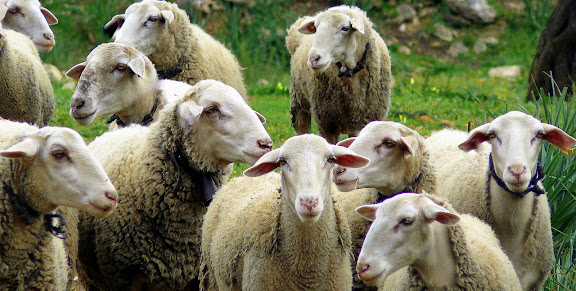
IBIZA´S SHEEP


OVEJA IBICENCA (SHEEP OF IBIZA)
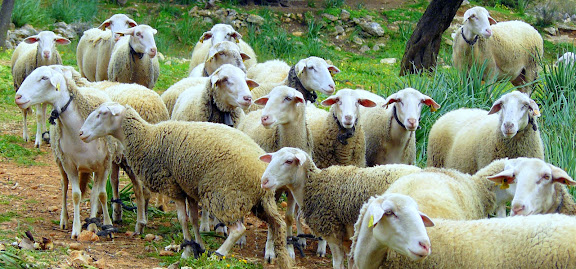
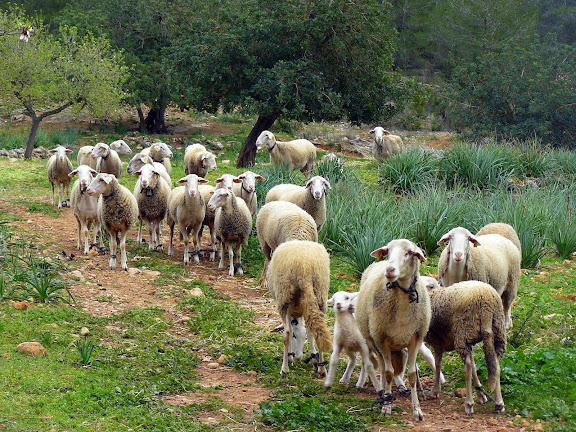
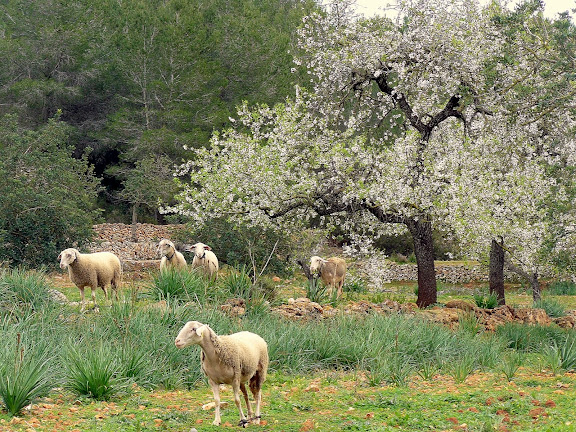
Some time ago I took these pictures, I think they are quite appropriate to start the year. They are like a postcards that everytime is more difficult to find them on Ibiza, but if we going out to the countryside and their fields we have many chances to find them. I have found these photographs left in a corner and so I have now the chance to pass a small tribute to a girl of "vila" that enjoy a lot her visits to the countryside of the island.

When I visited other Mediterranean islands such as Malta, Sicily or Sardinia I realized that sheep are different from Ibiza. It turns out that the sheep is a breed native Ibiza in the Balearic Islands. It has several characteristics, but it strikes me that the forms of their wicks are called pyramid schemes. Often with small reddish or black. Although they are generally white wool. This breed was mixed with others from others areas and the peninsula, but thanks to the breeders and its commitment to this breed, this breed of the Ibiza´s sheep has been achieved.