June 28, 2011

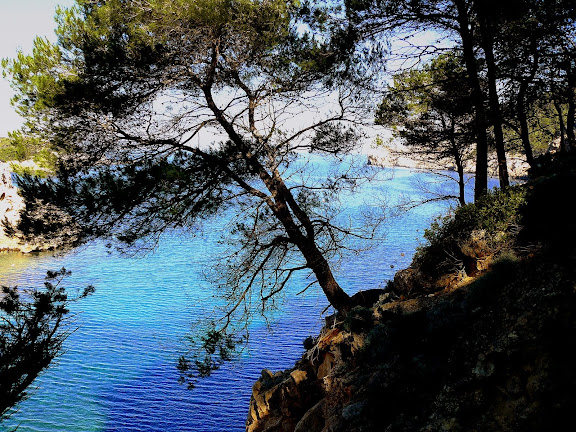
PLAYA DE LLEVANT (FORMENTERA)


EAST SIDE BEACHES IN Formentera


Although commonly known as Illetes are actually long beaches at the north side of the island of Formentera, the llevant means east side is referred to as "platges Llevant" and at the west side are located the famous "illetes" the name is because right in front are several small islands and so give the name.


Visit Formentera is always a great pleasure, but specially at down season as the beaches are empty but not that lonely neither as there is little human presence, as well as the colors of its waters along with the sand by step, without completely flat tracks and give an even is more wild on these shores over next days it will be packed.

But while these tourists arrive, the time can be taked to do with all the tranquility of a gentle walks along the shore or even venture to do some surfing. This beach is nearly two miles long, so it can not be considered small, if we cosider the island dimensions.


These very long sandy beaches are occasionally alternating with a more rocky area. Usually the lift area is where there exists more waves than in the west, although this depends on the wind direction and if there is a lot of waves in an area, we can very easily access the other where to find it completely quiet and calm sea.


the lucky first tourists of the season or the last ones, can go for long solitary walks (if desired) treading the fine white sand contrasting with the sea so transparent and clear. It is a pleasure to see these gorgeous beaches that other resorts of the world would like to have... Often is said that Formentera is the last Mediterranean paradise, and I hope it keeps that way, as it is now.

June 17, 2011

THE LIZARDS OF IBIZA AND FORMENTERA


LIZARDS OF PITYUSAS

The "podarcis pityusensis" is the only species of lizard that inhabits the islands and is endemic to Ibiza, Formentera and the islets that surrounds the small archipelago. Although summer is very frequently observed species this lizard is threatened. Can be easily seen on sunny days and after an hour and a half after sunrise. In winter lethargy especially on cloudy or cold days as they are a kind solar thermal animals. These lyzards has also been introduced on the island of Mallorca.


It feeds on pollen, flowers, nectar, leaves, fruits and seeds but also eat some small insects occasionally. Their worst enemies are cats, the almost non-existent genets and some small birds such as owls. Its color varies depending on the geographic area of the islands, so for example the ones in this post are photographed in the south-west of Formentera and have a turquoise color. In the eastern part of Formentera and the island of Ibiza in general are green and in the north of the island of Formentera, and some areas of Ibiza predominantly brown. In some of the small islets they have a blackish color.

Ibiza and Formentera have their small but intense "Jurassic Park" in miniature of this species in the case of the island of Formentera has become a symbol, not in vain in the past Formentera was called by the Greeks as Ophiusa (as is told by the huge number of snakes that lived there) maybe they existed already at that time in large quantities (many more than at present) and are the same lizards that today still enjoy the sun of this island paradise and that surprised their first visitors.

May 09, 2011

SAINT GEORGE´S CHURCH - SANT JORDI


PARISH CHURCH OF SAINT GEORGE (SANT JORDI)


Small but strong, not in vain was one of the few that were built thinking about worship and the protection of the population in the past, where Berber incursions were abundant on the island, a dangerous place to frequent looting and kidnapping of people who were sent to other lands as slaves


Small but strong, not in vain was one of the few that were built thinking about worship and the protection of the population in the past, where Berber incursions were abundant on the island and so it was a dangerous place for living due to frequent looting and kidnapping of people who were sent to other lands as slaves.


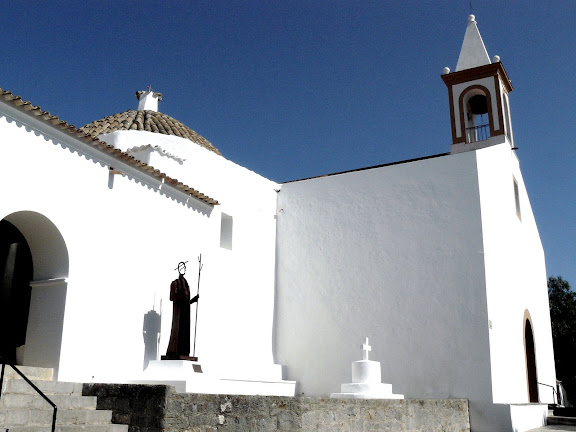
But along the Christian faith that built this church is the important work of protecting that some churches performed in the past. Here in this church is quite clear, to see the crenellated roof, which made ​​my delight imaginative picturing small battles between good ones(who were inside trying to defend themselves) and bad ones who were trying by all means go inside the small fortress


The roofs of some of its chapels contrasting with the bright white of the walls which in turn are contrasting with the blue sky, all in a very typical architectural vision in old buildings on the island. These chapels are from the eighteenth century when the church was not anymore a fortress and turned exclusively to worship.

Nowadays, as more peaceful time, this building is dedicated solely to the Christian worship. Its simplicity is its greatest feature like most churches on the island. Its three crosses (indispensable in the field churches) are located very close to the front door protected from strong midday sun by a magnificent and large porch that shelters and shade at the entrance of the temple, where voices echo of the assistants to the church service and after they greet and chat themself for a while.


In the western part this building can be seen in a less pleasant side, since instead of the calm white walls from the other side, so here we are aware of the more hard evidence of the previous stone fortress stage.


Below the image of St. George, a saint almost mythological faces a fierce dragon who kills in order to save a beautiful maiden (hence on the island to the inhabitants of Sant Jordi are known by the nickname of "matacucas" kills bugs ) And is venerated especially in former Soviet or Anglo-Saxon countries (eg the flag of England is simply the cross of St. George) that is repeated in countless flags of countries, including Georgia, Sardinia, and the former republic of Genoa among others, and is present in the coats of many places, including London, Milan, Aragon, Catalonia or Barcelona, Freiburg, Batalha in Portugal, Bologna, Montreal ... and even more places. The Moscow coat of arms bears the image of the saint.


May 08, 2011

CALA SAONA


CALA SAONA - FORMENTERA -

The last paradise in the Mediterranean as it is called to Formentera is now gorgeous in the spring, but from now on the small number of visitors every day grows as season advances toward the middle of the hot summer months. But still they have not arrived yet (although they are about to do so) the masses of Italians who with their "motorinos" will change the face of this island.


The turquoise waters reveal that we are in Formentera, which enjoys a spectacular colors and worthy of the best images of the Caribbean, which together with the blue sky as a set of several shades of blue and turquoise that really impress a lot.

From the beach you can access several trails that lead us down the coast of the island and, close to the coast there are some interesting piers or docks houses made ​​of wood and used to keep small boats from Formentera fishers keep them there while their boats are on standby awaiting the return to the sea.


This beach is the only one in the West side of this island, and there is no one around just rocky coast. Its white sands and calm waters make them highly recommended for families and people who love snorkel. Being situated on a bay waters are usually pretty quiet sea.


May 07, 2011

TYPICAL COSTUMES DETAILS IN IBIZA


TYPICAL DETAILS


Ibiza was a great unknown place in the world few decades ago, and then was gradually discovering the world and the first tourists enjoyed an island where everything was virtually unchanged for centuries. Among other things the costumes of their inhabitants. The arrival of tourists made things become different for their people, maybe in forty years has been brought forward a few centuries on the island, but thanks to some people efforts in maintaining the traditions nowadays we can still see how our ancestors were dressed and how it was their life style.


Ibiza and Formentera in its folklore and costumes are unique, as the folklore of the rest of the Balearic Islands is totally different, like the architecture of Ibiza which is sober and simple, the folklore of this island remains at the same rate as architecture although perhaps with many colorful touches. For example, in their musical instruments (always played by men) we can see that in their hands they use large castanets made ​​of juniper (some sources say are the biggest in the world) and elaborate for relief and different designs surfaces.

In the women's dresses we see that there are two types. That of "gonella" (a kind of long skirt pleated narrow) and usually wore headdress, or a hat or a long veil on her head with which covered the head to attend religious services. Women even in the twentieth century (at the end of this century began to disappear) always had covered the head with at least one tissue (picture below) and very rarely left her head uncovered. Hats (pictured above) but very sober always wore colorful ribbons as decoration, like those held the jewelry (on holidays) that carried the girls chest and marked their economical "status". The oldest were coral and silver jewelry and the most modern ones (XVIII century) were made by gold.


Usually these gold beads on the chest, they would inherit and enlarging over time from mother to daughter. Usually use at least two or more large beads in rhomboid shapes called "collarets" and then a finer accounts thick gold chains that used to take nine or thirteen strings (moon numbers), although for reasons of superstition they turned in twelve. They carry a large gold cross and sometimes below a jewel of gold with a religious image. Complete the collection of gold jewelry a large number of buttons and rings on every finger 3 (24 total) except on thumbs.

On the other hand, men of Ibiza in the folklore does not leave out the details. Curious the Phrygian cap (also called barretina) with curved top cap (the bottom black was the hallmark of the maritime areas) and has a curious history, as the origin of this piece would be in ancient Phrygia (now Turkey), in Roman times was the hallmark of the freedmen. In the nineteenth century, symbolizes freedom and the republic. In the shield and/or flags of several countries in Latin is present as a symbol of freedom such as Argentina or shield their former flag of 1,840 and shields that are on the flags of Haiti, Paraguay, and El Salvador, and in the shields of Bolivia, Cuba and the seals of the Senate and the U.S. Army among others. As a curious note regarding this cap is that only used in Pitiusas and is totally absent in the rest of the Balearic Islands, although used in several Mediterranean areas (sailors places), and is widely used in rural areas as Sicily, Sardinia, Catalonia, Valencia, Naples and even the Balkans.

April 23, 2011

SAN JOAN DE LABRITJA CHURCH

CHURCH OF SAINT JOHN (Sant Joan de Labritja)


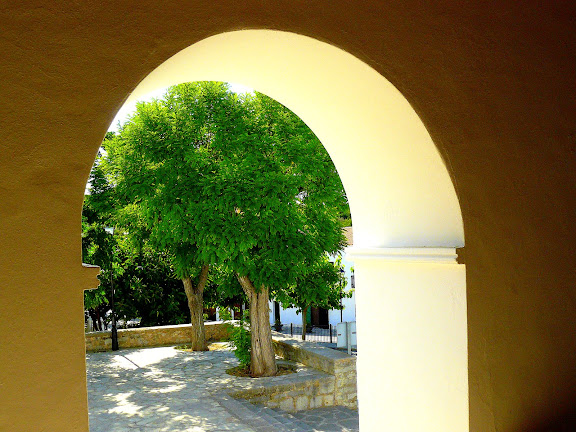
On hot summer afternoon the church square of San Joan is a cool and shaded place by leafy trees shadows. In my particulary case this church is where I have had more family events. Baptisms, communions, weddings and of course some funerals, a church that has marked many of my memories. So come back here (which I usually do not do much) is like coming back home. My mother was born in this town that also is said to be one of the villages where people have the greatest life expectancy in Spain. It is very common to see people who is over one hundred years in this municipality
En las calurosas tardes de verano la plaza de esta iglesia se encuentra fresca y con sombra gracias a los frondosos árboles que cobijan este lugar.


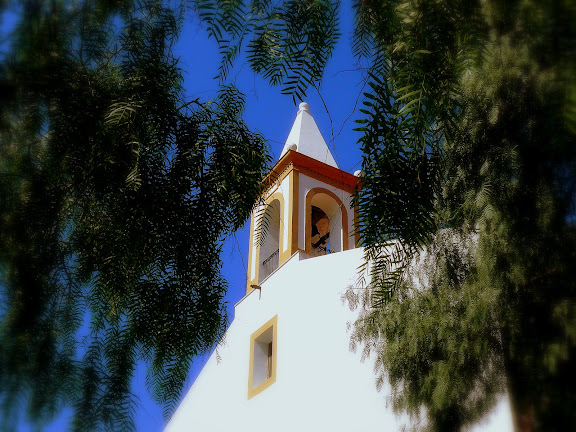
This church is dedicated to Saint John the Baptist and is curious how the bell is said (and totally true), which is equal to the towers that exist on the Asturian churches, and so, although reminds its neighboring town church of Sant Miquel Balançat. Anyway as a whole has an amazing aesthetic typically Ibicencan. whitewashed walls lend an air of white refreshingly its surroundings


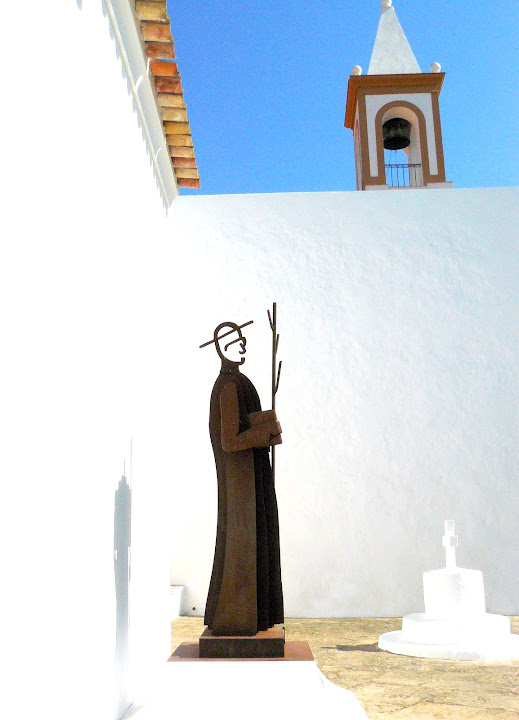
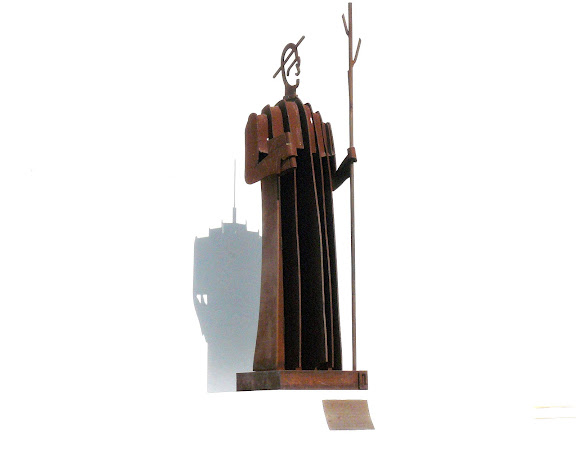
Vicent Ferrer Guash was a beloved priest for 26 years and the nearby parishes of San Lorenzo and San Vicente and was also priest of distant churches as San Rafael and San Telmo this one in the city of Ibiza. Born in 1906 and died in 1,986


In 2,007 some neighboroughs and several institutions have dedicated this monument of modern styling but that is perfectly suited to the architecture and outline of this place. A plaque recalls as a memorial for this beloved priest.


In all churches of the rural Ibiza, there's something not missing. These three crosses together known as Calvary. In this case three large crosses with grand staircases access the form in this church, which like everything that surrounds this place have simple and sober lines.


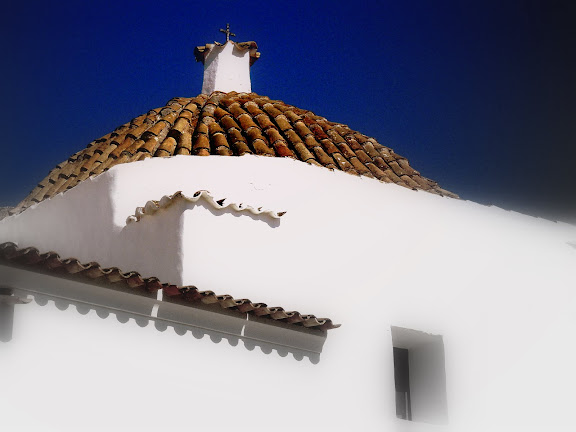
As in most rural churches a small chapel forms outside a kind of little dome, in this case also rural style. Surrounded by white walls are the tiles covering the chapel and when it rains the water droplets leading to a nearby well.


The porch of the church of Sant Joan is placed in one side, like for example the church of Our Lady of Jesus or the nearby San Vicente (Sa Cala)or Sant Antoni de Portmany (although is not usual) from here it can be see the trees in the square and in summer they protect us from the heat and stays cool to the porch.

March 26, 2011

DAY OF DOGS

IBIZA ON 4 LEGS
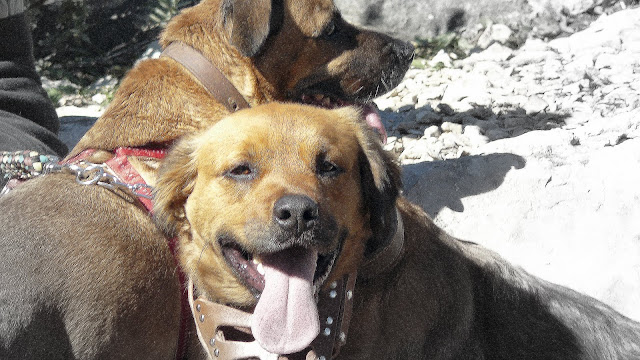
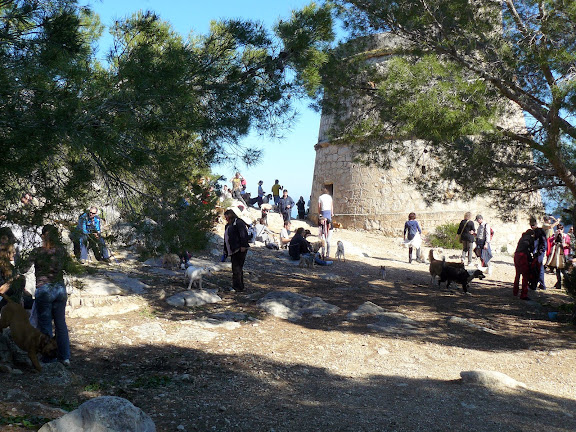
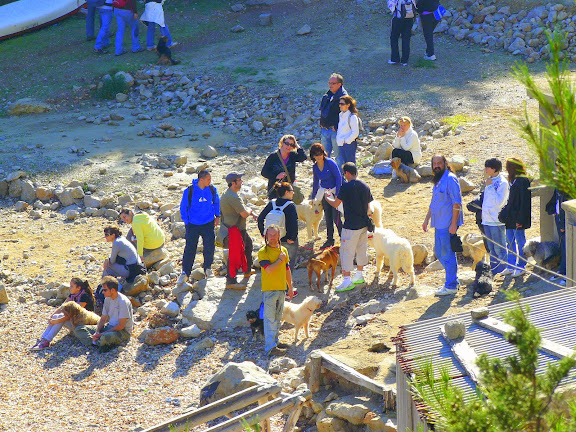
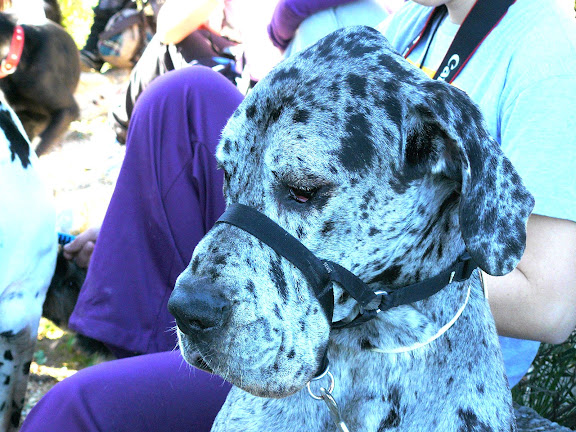
A happy idea someone had. About Ibiza excursions in the company of these friends. They also like to walk. And at all times behaved very good behavior. Everyone enjoyed a sunny day and a walk in the woods and shores of Ibiza.
To contact them here is their website:
http://www.ibiza4patas.com/
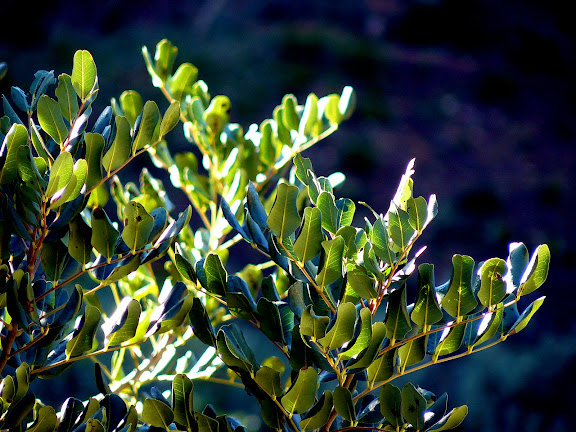
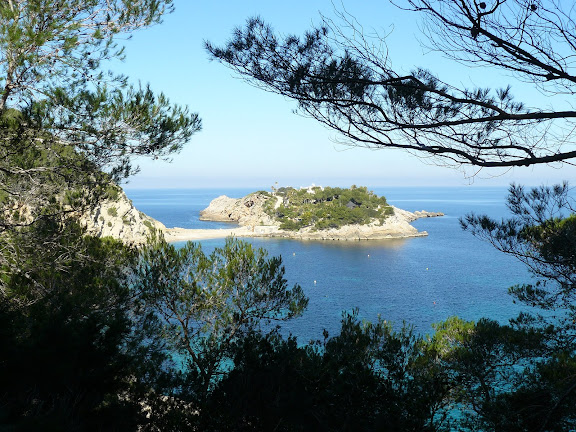
Nature in winter is at its zenith. Green forests, blue sea. Including carob (such as the image) and the pines were with us all around and all way.
The tour went through the north of Ibiza, the site chosen this time was the Port de Sant Miquel, and from there we went to the tower des Molar. A tower that I was lucky enough to visit for the first time and enjoy the fantastic view from there.
div>
A country can be judged by how it treats its animals. A wise words of Mahatma Gandhi which unfortunately if we apply to Spain, we would not be in very good place in view of the bloody bullfighting spectacle made ​​up with people who claim that this is a national holiday par excellence ... But the thing does not end there, Spain traditions still pulling goats from bell towers in some parts of the national geography among other niceties. Recently however Catalonia banned bullfighting, which seemed a arrival to the third milenium times, although it is clear that it was for other reasons far to prevent animal suffering, and other traditions as cruel as the bulls were not banded, therefore it was just a very hypocritical attitude
Un país se puede juzgar por la forma en que trata a sus animales.
I must say that in Ibiza fortunately the bull fighting arena was demolished many years ago and it doesn´t exists anymore of this "fiesta".
.
With all this national view of suffering animals abuse it is happy to see someone having this type of initiative for dogs and people where they both can enjoy together ...
Both, perhaps in this case people more than the animals enjoy the magnificent views over the Mediterranean which gave us the Torre des Molar ... Later in another further entry will enlarge the pictures from that place and the tower.
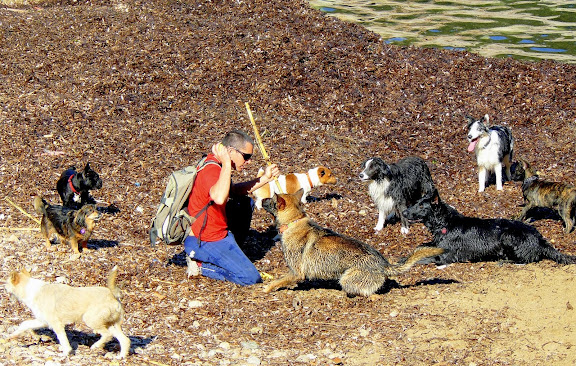
Cala Truja became a meeting place for pets and companions, a great day to enjoy the sand and some brave dogs went to into the cold sea water for having a nice bath...but chilly as well
Like the school childs when hiking, dogs were attentive to the games, and his own enjoyment including the bravest dogs with bathing in the sea, where the ball was pull out from someone. The way back was through a path beside the sea where the island's natural lush green colors mixed with pine trees and the blue Mediterranean sea.
div>

February 12, 2011

MILL IN SA PUNTA DES MOLI

MILL IN SA PUNTA
It is believed that the Arabs were who introduced windmills and water wheels and other those days mechanics systemshere on the island. As a child I visited Formentera on a day where I saw that there was something in Ibiza had passed into history, were the mills with blades. Many years after, probably at the initiative of a political culture, became the restoring of few remained standing mills. As a curiosity always amazed me that Ibiza and Formentera´s mills had six blades, two more than those showing in the books from La Mancha (Castille), where Don Quixote attacked those giants. Also those nice ones on pictures surrounded by tulips. The famous Dutch windmills.
The beauty of Ibiza ones had a more primitive, but rough looking. The Ibiza and Formentera mills are similar but not identical to the rest of the Balearic Islands, although in Menorca and Majorca are very similar to each other and have a home below the mill itself.
To talk about these mills in Ibiza, we must refer to the Puig des Molins in Ibiza Town. There are most mills (although only one restored with the blades), there is also one in Puig den Valls, near the city, Puig means mountain and was above the mountains where the wind blew over. But today the mill I propose is the one located in Sa Punta in Sant Antoni de Portmany that unlike the previous ones is located at the coast at the edge of the sea, and when the west wind blows I guess I was rolling and rolling. When was made nothing was around but today is blended into a tourist coast full of hotels and tourist attractions.
They were used to grind wheat and then make a good bread, very important in the island long ago. It seems that some mills in the island date from the thirteenth century and therefore I consider it an asset to be protected ...